
Career Change from Sales: Alternative Careers for Salespeople
Alternative careers for salespeople: customer success, recruiting, sales engineering, enablement, purchasing. BLS pay, quota data and the commission-to-salary math.


Contents · 8 sections
When salespeople leave sales, the destinations that come up again and again are customer success, recruiting, sales enablement and training, marketing, purchasing, and, for people who sold a technical product, sales engineering. The federal O*NET database connects sales representatives to several of them on task overlap. Choose by what you are leaving: the quota (customer success, enablement, in-house recruiting), the rejection (purchasing), the income swings (any salaried role, once you have run the math below), or only the ticket size (sales engineering). The 12 options, one line each:
- Customer success manager: the same customers after the signature, with a light quota or none.
- Account manager on a salary-heavy plan: the relationship half of the job, with less of the hunting.
- In-house recruiter: pipeline, discovery and closing, with a candidate as the customer.
- Sales enablement or training specialist: teaching the playbook you ran to the next cohort of reps.
- Buyer or purchasing agent: negotiation from the side of the table that says no.
- Purchasing manager: a related O*NET occupation, the management step of the same procurement work.
- Sales engineer: selling plus technical depth, for reps who already run their own demos.
- Marketing manager: shaping the message for a market instead of one buyer; high pay and high pressure.
- Operations manager: the forecasting and pipeline discipline, applied to running a team's output.
- Sales manager: a promotion that drops your personal quota and hands you the team's number.
- Personal financial advisor: relationship selling with a licence, and often with commission.
- Real estate agent: a state licence and a return to commission, covered below as a warning as much as an option.
Below you will find BLS pay for each move, data on how often quota gets hit, a résumé translation, and two exits that quietly bring commission back. If you suspect the answer sits outside the commercial function altogether, start with the career change quiz and read the rest with your result in hand.
The moves former salespeople make most
O*NET's related-occupations list for wholesale sales representatives is mostly sideways into other sales roles (advertising sales, technical sales, sales management) plus two exits worth noticing: sales engineers, and buyers and purchasing agents. For services sales representatives, the BLS group for people who sell services rather than goods, the list adds marketing managers and customer service representatives.
Grouped by how much they change your week, the realistic options look like this:
- Same customers, no quota: customer success, account management on a salary-heavy plan.
- Same skills, different product: in-house recruiting, where the product is a job and the customer is a candidate.
- Same skills, other side of the table: purchasing and procurement.
- Teaching what you did: sales enablement, training and development.
- More technical, bigger ticket: sales engineering.
- Shaping the message: marketing.
A sideways move into sales management belongs on a separate list. It raises pay and removes your personal quota, but the team's number becomes yours, and in O*NET's survey 86% of sales managers report working more than 40 hours a week. It is a promotion inside the same pressure system, which is fine if that is what you want. If the manager seat went to someone else and that is what started this search, read what to do after being passed over for promotion before you decide.
How often the number gets hit
Quota burnout has a structural cause that is easy to forget when you are inside it: most quotas are missed. RepVue's Cloud Sales Index, built from ratings by more than 49,000 quota-carrying professionals across 249 software companies, found that 43% of reps hit or exceeded quota in Q3 2025, which The Quota reported as the best quarter since mid-2023.
| Answer | Share |
|---|---|
| Hit or exceeded quota | 43.2% |
| Missed quota | 56.8% |
That is software sales specifically, where the data is best, and other sectors set quotas differently. But the pattern matters for the decision in front of you. If you have been missing quota, you may be in the majority rather than failing at the job, and a guide on what to do when you hate your job can help you tell a bad quarter from the wrong career. And if you have been hitting it, you are in the minority that the plan was designed around, which is useful evidence when you negotiate your next salary.
Your floor is the number that matters once commission comes out of the picture. In the Career Changer Index, experienced quiz takers name the lowest salary they would accept, and most set it in the middle of the range rather than at the top.
| Answer | Share |
|---|---|
| Under 40k | 11.1% |
| 40k-60k | 19.8% |
| 60k-80k | 21.6% |
| 80k-100k | 19.2% |
| 100k-150k | 14.5% |
| 150k or more | 13.8% |

Commission to salary: run the math on what you earned
An easy mistake in this decision is comparing a salary offer with their on-target earnings. OTE is what the plan pays at 100% attainment, and the section above shows how often that happens. Use your own history instead:
- Average your last three years of gross pay. Actual W-2 or payslip totals, including commission and SPIFs. One great year and one bad year average out to the number you can plan on.
- Note the spread. Write down the best and worst of the three. A $40,000 gap between them is a cost you have been carrying, in savings buffer and in stress.
- Price the new role the same way. Salary plus any bonus it pays, at a realistic payout rather than the maximum.
- Compare averages, then compare floors. A salary 5% below your three-year average can still be the better deal if your worst year was 30% below it.
A worked example, with round numbers for illustration: a rep on a 50/50 plan with $120,000 OTE has a $60,000 base. At 70% attainment on a linear plan the year pays $102,000; at 110% with a modest accelerator it might pay $130,000. A salaried offer at $100,000 looks like a pay cut against OTE and a small step down against the average, and it removes a range that ran from $102,000 to $130,000 in this example and can run much lower in a bad year.
One detail helps when you read the BLS pay figures below. The wage survey behind them counts commissions and production bonuses as pay, according to the wage definitions in the OEWS technical notes, so a sales representative median already includes typical commission. The comparison with salaried roles in the table is closer to like for like than it first appears.
If your own numbers show a drop, read whether a career change pay cut is worth it before you turn the offer down, since it covers how to size the gap and bridge it.
Salaried roles that still pay for persuasion
The table compares the two BLS sales groups most salespeople fall into with the destinations above. Customer success has no BLS occupation of its own, so its row carries a note instead of wages.
| Role | 25th percentile | Median | 75th percentile | What it keeps from sales |
|---|---|---|---|---|
| Sales rep, wholesale and manufacturing (baseline) | $50,470 | $72,080 | $99,640 | Includes commission; outside technical products |
| Sales rep, services (baseline) | $47,670 | $69,990 | $100,480 | Includes commission; people who sell services rather than goods |
| Sales engineer | $92,890 | $124,900 | $161,230 | Selling plus technical depth; usually a smaller variable share |
| Corporate recruiter (HR specialist) | $58,610 | $75,940 | $99,380 | Pipeline, discovery and closing, with a candidate as the customer |
| Sales enablement / training specialist | $50,110 | $69,280 | $95,050 | Teaching the playbook you ran |
| Buyer and purchasing agent | $60,800 | $77,710 | $100,820 | Negotiation from the other side of the table |
| Marketing manager | $123,020 | $166,790 | $216,410 | Shapes the message; high pay and high pressure |
| Personal financial advisor | $72,440 | $105,070 | $176,790 | Relationship selling with a licence; often commission-based |
| Customer success manager | No single BLS occupation; pay varies by company | Retention and expansion; quota light or none | ||
Annual wages from the U.S. Bureau of Labor Statistics Occupational Employment and Wage Statistics program, May 2025 release. Half of workers in a role earn more than the median; the 25th to 75th percentile span shows how wide the role pays. To see where your current salary sits in your own occupation, use the free salary benchmark.
Recruiting and purchasing both sit a little above the non-technical wholesale median, which is why they are the two moves that most often keep income steady without a quota. Sales engineering and marketing management pay considerably more, and both ask for something extra: technical depth in the first case, and a tolerance for pressure in the second.
Two exits that bring commission back
Some of the most advertised moves for salespeople replace one variable-pay system with another. That is fine if you want it, and a surprise if you do not.
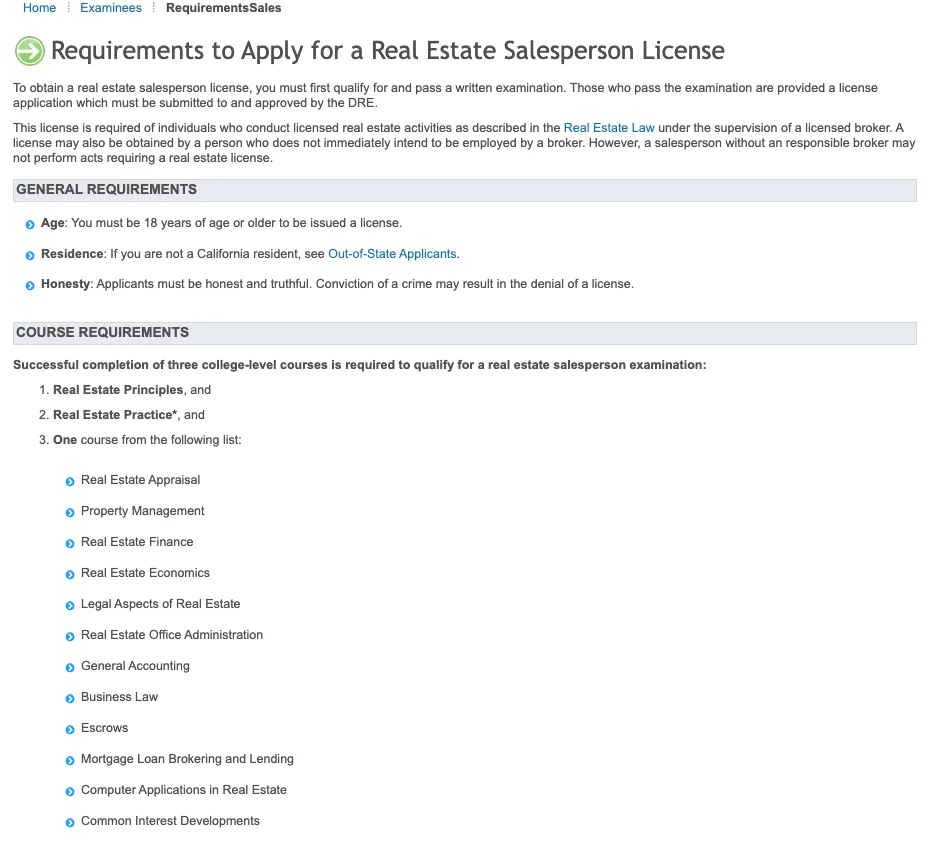
The first is real estate. In O*NET's work-context survey, 96% of real estate sales agents describe their job as highly or extremely competitive, the highest figure of any occupation on this page, and it adds licensing on top: California, for example, requires three college-level courses and a written examination before issuing a salesperson licence. The second is financial advice, which adds licensing exams, and where you should read the pay plan closely before you study, because some advice roles pay a salary and others pay a share of the business you bring in.
The chart below puts those next to the salaried exits on the same measure.
| Answer | Share |
|---|---|
| Real estate sales agents | 95.6% |
| Sales managers | 90% |
| Sales reps, wholesale (non-technical) | 82% |
| Sales engineers | 55.8% |
| Personal financial advisors | 48% |
| HR specialists (incl. recruiters) | 29.4% |
| Training and development specialists | 21.7% |
| Purchasing agents | 21.1% |
If the competitive pressure is what you are leaving, the bottom half of that chart is the target list. If you like the competition and are leaving something else, such as the product, the travel or a bad manager, a change of company inside sales may solve it for less.
Rewrite the résumé in the destination's language
Sales résumés are written for sales hiring managers: quota percentages, rankings, club trips. Outside sales, those read as context-free numbers. The same achievements, described as the underlying skill, read as capability:
| On a sales résumé | In the destination's language | Where it counts |
|---|---|---|
| 118% of quota, #3 of 40 reps | Grew a portfolio of accounts by X% against a target | Customer success, account management |
| Ran full-cycle deals from prospecting to close | Owned a pipeline from sourcing to offer | Recruiting |
| Negotiated multi-year contracts and renewals | Negotiated price, terms and renewals with suppliers | Purchasing |
| Onboarded and shadowed new reps | Designed and delivered training for new hires | Enablement, training |
| Accurate quarterly forecast | Forecast demand and managed a pipeline to plan | Operations, purchasing |
| Discovery calls with technical buyers | Translated technical requirements into solutions | Sales engineering, customer success |
The guide to how to change careers covers the general case of moving with no experience in the new field. The sales version has one extra step: remove the ranking language entirely for roles outside sales, because "top performer" reads as a sales culture signal to a hiring manager who may be trying to avoid one.
Related guides: career change from HR.
Licences, degrees, and the moves that need neither
Needs neither. Customer success, in-house recruiting, enablement and purchasing hire on experience. In O*NET's education data, 47% of HR specialists, 78% of training and development specialists and 65% of purchasing agents name a bachelor's as the level the job requires, and none of the three is licensed. If you have a degree and a sales record, you meet the bar.
Needs technical depth. Sales engineering. O*NET finds 57% of sales engineers say a bachelor's is required and 25% a master's, usually in a technical field. If you sold a technical product and already run the demo yourself, you may be closer than you think; if you sold on relationships and handed technical questions to someone else, this is a longer retrain.
Needs a licence. Financial advice runs through FINRA's Securities Industry Essentials exam and, for advisers, NASAA exams such as the Series 65 or 66. Real estate needs a state licence, as above. Check the pay structure of the roles you would apply for before you book an exam, because both fields include plenty of commission-based seats. Bankers leaving for advice face the same licensing path from the other direction, which the page on career changes out of banking covers.
Needs a portfolio. Marketing. Hiring managers want to see campaigns, messaging or content you were responsible for. Many salespeople have this already, in the form of sequences, battle cards or webinars they built, and simply have not framed it as marketing work.
For the neighbouring move, see career change from marketing.
Which part of selling to keep
Every sales job bundles four activities that different people love and hate: the discovery (working out what the customer needs), the persuasion (moving them to a decision), the negotiation (terms and price), and the relationship (the account after the signature). Most people who leave sales want out of one or two of them and would happily keep the rest.
- If you would keep the discovery, customer success and sales engineering are built around it.
- If you would keep the negotiation, purchasing gives you more of it with none of the prospecting.
- If you would keep the relationship, account management on a salary-heavy plan or customer success.
- If you would keep the persuasion but aim it at a market instead of one buyer, marketing.
- If what you liked was the moment a new rep closed their first deal, enablement and training.
Question 1
Is the quota the thing you want gone?
Yes: Customer success, in-house recruiting or enablement, which drop the personal number.
No: Go to the next question.
Question 2
Is it the rejection?
Yes: Purchasing, where you sit on the side of the table that says no.
No: Go to the next question.
Question 3
Is it the swings in income from quarter to quarter?
Yes: Any salaried role works, but compare the offer with your three-year average, never with OTE.
No: Go to the next question.
Question 4
Do you still like selling and want a bigger ticket?
Yes: Sales engineering, if you can run the technical demo yourself.
No: A sideways commercial move will likely feel the same within a year. Widen the search to what absorbs you.
Stop at the first yes. The quota comes first because it is the pressure the most common exits on this page remove, and the later questions only matter once it is ruled out.
If none of the four holds any energy for you now, a sideways move inside the commercial function will probably feel like the same job within a year. That is the point where a wider look at what you are drawn to, beyond the jobs a sales résumé qualifies you for, deserves a proper look. The quiz linked above does that in a median of about seven minutes and returns careers matched to your archetype, including ones well outside the commercial function.
Frequently Asked Questions
Ready to find your passion career?
The free under-10-minute quiz maps your childhood patterns and flow triggers to one of 20 archetypes, then gives you matched careers and a 7-day first-step plan.
Take the Free Career QuizRelated Articles
Trusted by 12,200+ career-quiz takers across 165+ countries · Methods covered in