
Career Change for Dental Hygienists: Options Beyond the Chair
Career change for dental hygienists: public health, education, dental sales, DSO training, insurance review, nursing. BLS pay, pain and workforce data, fit test.

Contents · 8 sections
Dental hygienists who leave the operatory most often move into dental product and equipment sales, clinical training for manufacturers and dental service organisations, dental hygiene education, practice or DSO management, dental insurance claims review, or public health and community oral health programs. A smaller group retrains as nurses or respiratory therapists. These are 15 career changes hygienists make, with what carries over to each:
- Dental product or equipment sales. Chairside demonstrations and peer credibility with dentists.
- Clinical trainer at a DSO or manufacturer. Every appointment included patient education, now aimed at clinicians.
- Dental hygiene program faculty. Usually needs a bachelor's, often a master's.
- Practice or DSO operations manager. You already run a column of the schedule and the recall system.
- Dental insurance claims reviewer. Reading charts and radiographs against coverage rules, often remotely.
- Treatment coordinator. Explaining why a patient needs perio treatment is consultative selling.
- Dental software and product roles. Periodontal charting is structured clinical documentation.
- Infection prevention and training roles. Regulated process compliance you practise on every patient.
- Community oral health educator. Public health programs, with lower pay and higher reported satisfaction.
- Public health or school sealant program hygienist. Stays clinical in a setting with different pressures.
- Direct-access hygienist. Assess and treat without the dentist present, in the states that allow it.
- Orofacial myofunctional therapist. Exercise-based, mostly private-pay work with far less instrumentation.
- Dental sleep medicine coordinator. Screening, education and follow-up for oral appliance patients.
- Dental therapist. A mid-level provider role in a limited number of states, with added education.
- Registered nurse or respiratory therapist. Both on O*NET's related list, both a new program and licence.
Which of the three problems are you solving?
Which one fits depends on what you are trying to get away from. If it is the physical toll of a full column of patients, you need a role where your hands are no longer the tool, such as sales, training or insurance review. If it is a particular office, the data suggests a different practice or a public health post may solve it without leaving hygiene. If it is the ceiling on what an associate-degree licence can become, education and management raise it.
The career change quiz sorts those three situations from your own answers, resolving them to one of 20 archetypes with matched careers. This guide gives you the destinations, the pay data and the evidence behind each.
Question 1
Is pain in your neck, shoulders, back or hands the main reason you are looking?
Yes: Move to a role where your hands are no longer the tool: claims review, clinical training or DSO operations first, then sales.
No: Go to the next question.
Question 2
Would a different dentist, manager or production target fix most of it?
Yes: Change office before changing career. A public health program, a DSO with a training track or a direct-access setting is the cheaper test.
No: Go to the next question.
Question 3
Is the ceiling on an associate-degree licence the problem?
Yes: Education and management raise it; faculty posts usually need a bachelor's first.
No: The pull may be toward a different field altogether.
Pain comes first because it sets the timetable; the office and the ceiling can wait a quarter while you test them.
Your body sets the deadline
Most career changes are driven by interest, pay or burnout. Dental hygiene adds a fourth driver that few other professions share at the same intensity: the job wears out the body doing it. In O*NET's work-context survey for hygienists, 100% report making repetitive hand motions continually or almost continually, and 37% report bending or twisting their body continually. The pain research matches what those numbers predict.
A national survey of registered dental hygienists in Australia, published in BMC Research Notes, received 624 responses. The neck, shoulder and lower back were the most common problem areas, and of those reporting pain, more than two thirds said it lasted longer than two days.
| Answer | Share |
|---|---|
| Neck | 85% |
| Shoulder | 70% |
| Lower back | 68% |
North American evidence points the same way. A survey of 647 Canadian hygienists in the Canadian Journal of Dental Hygiene found 83% reported a work-related musculoskeletal disorder, with carpal tunnel syndrome and tendonitis the most common, and a positive correlation between years in practice and incidence.
This changes how to plan the move. A teacher or accountant can wait for a good moment to switch; a hygienist with worsening neck pain may not have that luxury, and a move planned at year eight is easier than one forced at year twelve. If you are working out how long a switch will realistically take, how long a career change takes lays out the typical phases so you can plan backwards from what your body is telling you.
Where hygienists go when the chair stops working for them
ONET's profile of dental hygienists lists related occupations that are mostly clinical: dental assistants, registered and licensed practical nurses, medical assistants, ophthalmic technicians, respiratory therapists and surgical assistants. Those are the retraining routes. The moves most hygienists make instead use the non-clinical half of the ONET task list: documenting oral health history, charting disease for the dentist's evaluation, taking and processing radiographs, and delivering patient education.
- Dental sales and professional relations. Manufacturers and distributors want someone who can use the product chairside and speak to a dentist as a peer.
- Clinical training and education. DSOs, manufacturers and software companies train other clinicians. Hygiene programs need faculty and clinical instructors.
- Practice and DSO operations. Hygiene coordinator, clinical lead, then regional operations. You already run a column of the schedule.
- Insurance and claims review. Dental benefits companies use hygienists to review claims and treatment documentation, often remotely.
- Public health and community programs. School sealant programs, community clinics, long-term care and direct-access practice keep you clinical in a setting with different pressures.
There is also a set of niche clinical routes that the job lists mention and rarely explain. Orofacial myofunctional therapy retrains hygienists to treat tongue, lip and breathing patterns through exercise programs, and it is mostly private-pay, appointment-based work with far less instrumentation than a perio column. Dental sleep medicine coordination puts hygienists in practices that make oral appliances for sleep apnea, handling screening, patient education and follow-up. Dental therapy, a mid-level provider role that can perform some restorative procedures, is licensed in a limited number of states, with Minnesota the first to authorise it in 2009, and it requires additional education. Each of these keeps you in oral health with a different physical load. None of them is a quick exit, and each depends on local demand, so talk to two people doing the work in your region before paying for training.
The honest ranking for a hygienist whose main problem is pain runs like this: desk roles first (claims review, training, operations), then sales, then niche clinical work, then public health, then a better office. For a hygienist whose main problem is a toxic practice, the ranking nearly reverses. The evidence above and the next section help you tell which one you are.
Quitting the office is different from quitting hygiene
The second driver is the workplace, and here the data points toward a less drastic answer than a career change. The ADA Health Policy Institute's 2022 Dental Workforce Shortages study surveyed 5,122 dental hygienists alongside dental assistants and dentists.
| Answer | Share |
|---|---|
| High (8 to 10) | 54.5% |
| Middle (4 to 7) | 37.7% |
| Low (1 to 3) | 7.7% |
Three findings from the same report matter for your decision. First, 79.5% of hygienists said they had voluntarily left a hygiene position at some point, so changing offices is the profession's normal mechanism for fixing a bad fit. Second, the top reason for dissatisfaction was negative workplace culture, ahead of insufficient pay and feeling overworked, and culture was also the top reason among hygienists who had left the field. Third, hygienists working in public health reported higher satisfaction than their private-practice peers.
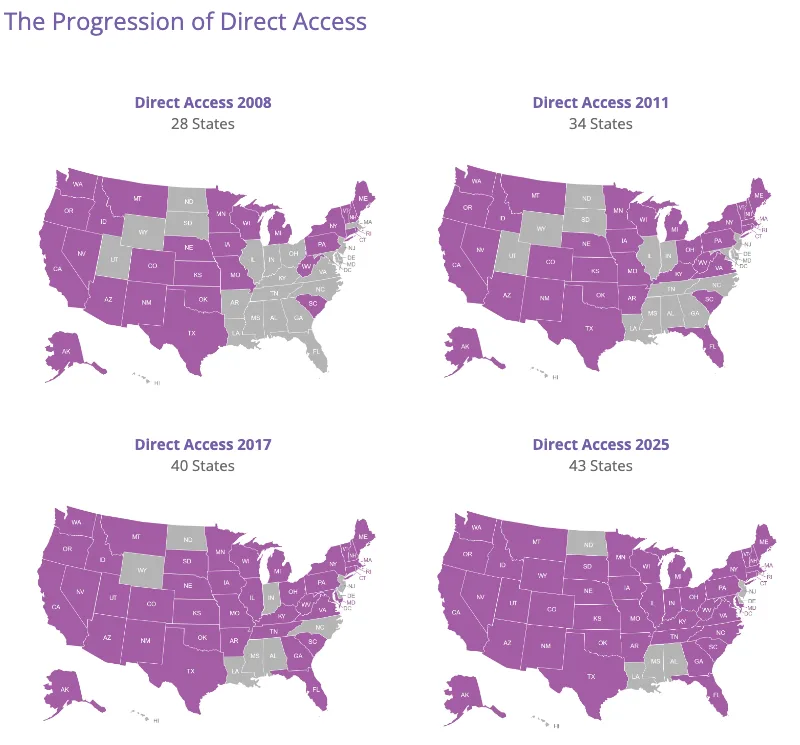
Culture is a property of an office. If your pain is manageable and your frustration is with a dentist, a manager or a production target, a different practice, a public health program or a direct-access setting is a cheaper experiment than a new career. Pharmacists found the same split in their own workforce data, with chain counters rating workload far heavier than independent ones, as the pharmacist guide to changing setting before profession shows. Veterinarians run the same test through relief shifts, and the vet guide to relief work before leaving practice explains which problems a new clinic fixes and which follow you. The American Dental Hygienists' Association reports that 43 states permit direct access in some form, meaning a hygienist can assess and treat without the dentist's specific authorisation or presence. The rules vary widely by state, so check your own board before counting on it.
Chairside skills, translated
Outside dentistry, nobody knows what scaling and root planing involves. They do understand what it proves.
| Hygiene work | What it proves | Where it counts |
|---|---|---|
| Periodontal charting and risk assessment | Structured clinical documentation | Insurance review, compliance, dental software |
| Explaining why a patient needs perio treatment | Consultative selling to a sceptical buyer | Sales, treatment coordination |
| Radiograph capture and review | Image-based assessment against criteria | Claims review, imaging product roles |
| Running a full recall column | Schedule and capacity management | Practice and DSO operations |
| Infection control protocols | Regulated process compliance | Infection prevention, training, product roles |
| Oral hygiene instruction | Behaviour change education | Clinical training, community health programs |
Put the middle column on your résumé and the left column in the interview as proof. "Increased perio treatment acceptance in my column" is a sales sentence; "provided patient education" is not.
Seven destinations with national pay
National Bureau of Labor Statistics percentiles for the closest standard occupation to each move, with dental hygienist as the baseline. Several hygiene exits have no separate BLS series, so the label names the occupation the figures come from.
| Role | 25th percentile | Median | 75th percentile | What your hygiene years buy you |
|---|---|---|---|---|
| Dental hygienist (baseline) | $83,570 | $98,100 | $108,480 | Your comparison point |
| Dental product or equipment sales | $75,030 | $104,920 | $158,160 | Chairside demonstrations and peer credibility with dentists |
| Clinical trainer at a DSO or manufacturer | $50,110 | $69,280 | $95,050 | Every appointment included patient education; this is the same skill aimed at clinicians |
| Dental hygiene program faculty | $75,690 | $107,310 | $210,370 | Usually needs a bachelor's, often a master's |
| Practice or DSO operations manager | $94,700 | $123,860 | $166,100 | Scheduling, recall systems and team lead experience |
| Dental insurance claims reviewer | $61,160 | $78,000 | $98,030 | Reading charts and radiographs against coverage rules; often remote |
| Community oral health educator (BLS: health education specialists) | $50,620 | $64,070 | $87,130 | Public health programs; lower pay, higher reported satisfaction in the ADA data |
| Registered nurse (retraining route) | $80,330 | $97,550 | $112,350 | O*NET related occupation; a new licence and program |
Annual wages from the U.S. Bureau of Labor Statistics Occupational Employment and Wage Statistics program, May 2025 release. Half of workers in a role earn more than the median; the 25th to 75th percentile span shows how wide the role pays. To see where your current salary sits in your own occupation, use the free salary benchmark.
The pattern is uncomfortable and worth stating. Dental hygiene pays well for an associate-degree profession, and several desk exits start below it. Sales and management are the rows where the ceiling rises; education and public health trade pay for sustainability. Look at the 25th percentile as well as the median, because that is closer to where a career changer starts.
A fit check before you hand in notice
MyPassion sorts career changers by the struggle behind the move and the priority they bring to the next step. For hygienists, the priority column usually settles the direction.
What you need next →
| Income-Focused | Lifestyle Seeker | Stability First | Experimenter | |
|---|---|---|---|---|
| Career Switcher | Ambitious Pivoter | Freedom Seeker | Strategic Shifter | Curious Transformer |
| Grad Explorer | Rising Achiever | Modern Explorer | Foundation Builder | Open-Minded Starter |
| Multi-Passionate | Renaissance Earner | Creative Polymath | Focused Generalist | Passion Collector |
| Purpose Seeker | Impact Driver | Meaningful Creator | Mission Seeker | Values Explorer |
| Explorer | Emerging Achiever | Authentic Seeker | Grounded Explorer | Curious Adventurer |
↓ What is hardest right now
Highlighted: Career Switcher crossed with Stability First resolves to The Strategic Shifter. Source: the live MyPassion.ai archetype matrix.
- Stability first. Claims review, DSO operations, clinical training. Salaried, predictable work that is light on your hands.
- Income first. Sales or management. A higher ceiling with more variable pay.
- Sustainable week first. Public health, education, or a better office with a lighter schedule.
- Still experimenting. Keep two clinical days and use the rest to test one desk role for a quarter.
A sustainable week is the most common goal among experienced career changers generally. In the Career Changer Index, flexible or remote work they enjoy is the top six-month priority, well ahead of earning more.
| Answer | Share |
|---|---|
| Flexible or remote work they enjoy | 41.7% |
| Passion projects part-time | 24.7% |
| Earn more, even if it means grinding | 17.5% |
| Any stable job to get started | 16.1% |

The quiz places you on that grid from your own answers, starting with an explicit question about what brought you to the decision and branching from there, so a hygienist in pain and a hygienist in a bad office end up in different cells. For the sequence from that answer to a tested direction, see the step-by-step career change sequence.
What each move asks you to go back to school for
Nothing new. Sales, clinical training, practice management and claims review hire on your licence, degree and clinical years. An active licence and a few PRN days a month also keep a clinical fallback while you test the move.
A bachelor's or master's. Faculty roles in accredited hygiene programs typically expect at least a bachelor's, and public health program leadership often prefers one. Most hygienists entered with an associate degree (75% of O*NET's respondents say one is required), and degree-completion programs for licensed hygienists exist to close that gap, often part-time and online.
A new licence. Nursing and respiratory therapy both appear on O*NET's related list and both mean a new program and exam. They make sense if you want to stay clinical in a different body position. They make less sense if your hands and neck are the problem and the new role keeps you at the bedside, so ask about the physical demands before you enrol. Physical therapists after a decade of patient transfers describe the same problem, and where PTs go once treatment stops fitting lists the desk roles they favour.
For a closely related clinical exit, see career change from nursing.
Related guides: alternative careers for respiratory therapists.
Take the free quiz on a day off, before you enrol in anything. You get an archetype and a ranked set of matched careers with first steps, and 12,200+ people have taken it. Use it to decide whether your next move is a new office, a new setting or a new field while your hands still have a vote.
Frequently Asked Questions
Ready to find your passion career?
The free under-10-minute quiz maps your childhood patterns and flow triggers to one of 20 archetypes, then gives you matched careers and a 7-day first-step plan.
Take the Free Career QuizRelated Articles
Trusted by 12,200+ career-quiz takers across 165+ countries · Methods covered in