
Career Change for Pharmacists: Leave Retail or Leave Pharmacy?
A career change for pharmacists starts with one question: leave retail, or leave pharmacy? Workforce data, BLS pay for 8 exits, credentials and a fit filter.


Contents · 7 sections
A career change for pharmacists usually runs in one of three directions: a new setting inside pharmacy, the PharmD taken into the pharmaceutical industry, or a move beyond the licence into management, academia or another field. Which one fits depends on a question most job lists skip: is retail the problem, or is pharmacy? A pharmacist worn down by chain-store workload may be one setting away from a job they like. These are the 14 roles pharmacists move into most, with what carries over:
- Ambulatory care pharmacist: the counselling and disease management you already do, at clinic pace instead of counter pace.
- Hospital clinical pharmacist: rounds and therapeutic decisions with the care team; usually needs a PGY1 residency.
- Managed care or PBM pharmacist: formulary and prior authorisation work that keeps the licence in daily use.
- Long-term care consultant pharmacist: medication regimen reviews for residents, suited to pharmacists who like depth over volume.
- Pharmacy director or health system manager: operations, staffing and formulary experience turned into budget authority.
- Medical information specialist: answering clinicians' drug questions for a manufacturer, the closest industry job to verification.
- Medical science liaison: peer-level drug conversations with specialists in one therapeutic area.
- Pharmacovigilance and drug safety scientist: the interaction-spotting habit from every fill, applied to adverse event reports.
- Regulatory affairs specialist: labelling and submissions for pharmacists who read package inserts closely.
- Medical affairs manager: the senior industry route, usually after a fellowship or years as an MSL.
- Clinical research or drug development scientist: trial design and drug knowledge; research posts often want a residency or PhD.
- Pharmacy informatics analyst: order sets, dispensing systems and alerts you already work inside every shift.
- Medical writer: turning drug information into documents clinicians and regulators trust.
- Pharmacy school faculty: teaching and precepting, with academic pay traded for schedule control.
Where pharmacists go: three directions
ONET's profile of pharmacists lists related occupations that are all prescribers: nurse practitioners, physician assistants, several physician specialties. That list reflects shared clinical knowledge, and it says little about where pharmacists move, since each of those needs a new degree. The more useful clue is in ONET's task list: reviewing prescriptions for suitability, advising other clinicians on drug quality and effectiveness, analysing prescribing patterns to prevent harmful interactions, and running specialised services for diabetes, asthma and hypertension. Each of those tasks is the centre of a job somewhere else.
| Direction | Typical roles | Keeps the licence in use? |
|---|---|---|
| Same profession, new setting | Ambulatory care, managed care and PBM, hospital practice, informatics, specialty and long-term care pharmacy | Yes |
| Industry | Medical information, medical science liaison, pharmacovigilance, regulatory affairs, medical writing, clinical research | Licence valued, rarely required |
| Beyond pharmacy | Health system management, academia, health tech product roles, consulting | No |
The industry row needs unpacking, because the titles are opaque from behind a counter.
- Medical information. You answer the questions clinicians and patients send to a drug manufacturer: dosing in renal impairment, stability outside the fridge, what the trial data says about a subgroup. It is the closest industry job to the verification and counselling you already do, and a common first step for community pharmacists.
- Medical science liaison. A field role that builds scientific relationships with specialists in one therapeutic area. MSLs present data, answer off-label questions within the rules, and bring clinical insight back to the company. It rewards the pharmacist who enjoys a hard conversation with a prescriber who disagrees. Physicians leaving practice apply for the same field roles, and the nonclinical paths doctors take show how they pitch an MD against your PharmD.
- Pharmacovigilance and drug safety. You process and assess adverse event reports and look for safety signals across them. The work is structured, deadline-driven and remote-friendly, and it uses the pattern recognition behind every interaction you have caught at the verification station.
- Regulatory affairs. You prepare and maintain the submissions and labelling that keep a product legal to sell. It suits pharmacists who read package inserts closely and like getting details exactly right.
- Medical writing. Clinical study reports, regulatory documents, education materials. A portfolio of two or three samples matters more than any title.
- Managed care and PBM roles. Formulary management, prior authorisation review and clinical programs for insurers. Many of these stay close to practice and keep the licence in daily use, which makes them a halfway house between direction one and direction two.
The common thread is that each role pays for judgment about drugs rather than for the count of prescriptions filled. That is the variable to hold on to when you compare offers.
The salary ceiling you are walking away from
This is where a pharmacist's career change differs from almost every other one on this site. At the median, pharmacists out-earn both nurse practitioners and physician assistants in BLS data, and most exits start below that level. The national Bureau of Labor Statistics percentiles below put numbers on that.
| Role | 25th percentile | Median | 75th percentile | Why pharmacists get hired there |
|---|---|---|---|---|
| Pharmacist (baseline) | $129,380 | $140,910 | $161,840 | The number every exit gets measured against |
| Pharmacy director or health system manager | $94,700 | $123,860 | $166,100 | Operations, formulary and staffing experience; the most common way to raise the ceiling |
| Medical affairs or clinical science manager (BLS: natural sciences managers) | $119,430 | $167,220 | $221,540 | Senior industry route, usually after a fellowship or MSL years |
| Medical science liaison | no separate BLS series | Peer-level drug conversations with specialists; PharmD is a standard entry degree | ||
| Clinical research or drug development scientist (BLS: medical scientists) | $79,840 | $103,410 | $139,380 | Trial design and drug knowledge; research posts often want a residency or PhD |
| Pharmacy informatics analyst (BLS: computer systems analysts) | $82,860 | $105,850 | $134,110 | Order sets, dispensing systems and interaction alerts you already live inside |
| Regulatory affairs or compliance specialist (BLS: compliance officers) | $61,280 | $80,730 | $109,010 | Labelling, controlled-substance and inspection experience |
| Medical writer (BLS: technical writers) | $70,880 | $90,390 | $115,510 | Turning drug information into documents clinicians and regulators trust |
| Pharmacy school faculty | $75,690 | $107,310 | $210,370 | Teaching and precepting; academic pay trades against schedule control |
Annual wages from the U.S. Bureau of Labor Statistics Occupational Employment and Wage Statistics program, May 2025 release. Half of workers in a role earn more than the median; the 25th to 75th percentile span shows how wide the role pays. To see where your current salary sits in your own occupation, use the free salary benchmark.
Read the rows in pairs. Management and senior industry roles can match or pass your current pay. Writing, compliance and entry research roles usually start below it. That gap is the main reason pharmacists stay in jobs they dislike, and it deserves arithmetic rather than dread. Nurse practitioners face a version of the same trap, where popular exits quietly pay below the degree, and the NP guide to roles that keep the advanced degree shows how they check an offer against it. Job switchers in general do better than many expect: Pew Research Center found that 60% of US workers who changed jobs saw an inflation-adjusted pay rise over the year to March 2022, against 47% of those who stayed. That is about job changes in general, and a move from a pharmacist salary into medical writing will not follow the average. For the method of pricing a step down properly, including how long it takes to earn it back, see career change pay cut.
Retail is the problem more often than pharmacy
The 2024 National Pharmacist Workforce Study, commissioned by the Pharmacy Workforce Center and published by AACP, received 5,110 usable responses from licensed pharmacists. Most practising respondents (59.1%) worked in community settings, and the workload data shows why so many searches for alternative careers start there.
| Answer | Share |
|---|---|
| Chain community pharmacy | 91% |
| Mass merchandiser pharmacy | 88% |
| All full-time pharmacists | 73% |
| Other patient care settings | 57% |
| Independent community pharmacy | 55% |
Workload is not the only setting effect. In the same survey, 33.2% of community pharmacists reported being bullied, threatened or harassed at work in the previous twelve months, against 17.2% in hospitals and health systems. A 36-point gap in workload and a near two-to-one gap in harassment between settings inside one profession is a strong argument for testing a setting change before a career change. Veterinarians weigh the same choice between relief work in a new practice and leaving clinical work, as the vet guide to exits beyond general practice sets out. If you have never worked outside chain retail, a hospital, ambulatory care or managed care role is the cheapest experiment you can run, and it keeps your pay close to where it is.
If you have already worked in two settings and the work itself has gone flat, the other two directions are yours.
Residency, fellowship, or neither
The credential question is sharper for pharmacists than for most healthcare workers, because the profession has a formal post-graduate track and many roles now filter on it.
Usually needs a residency. Hospital clinical pharmacist and many ambulatory care roles expect a PGY1 residency, and specialist clinical roles a PGY2. If you are several years into retail, a residency is possible but means a year at a resident's stipend.
A fellowship is the direct route. Industry fellowships at manufacturers are the conventional door into medical affairs, regulatory and clinical development. They are competitive and typically last one to two years, so experienced pharmacists more often enter industry sideways through medical information or drug safety roles.
Neither is needed. Medical information, pharmacovigilance case processing, managed care and prior authorisation, informatics and medical writing regularly hire experienced community pharmacists. Board certification in a specialty, a documented informatics project, or a writing sample does more for these roles than a second post-graduate year. How to sequence a move like this while the credential question is open is covered in our guide to career change at any stage.
A note on the search term that sits next to this one: pharmacy technicians are a separate occupation with their own career change questions, and the moves above assume a PharmD and licence.
Your PharmD in industry language
Industry recruiters read résumés for a vocabulary pharmacists rarely use about themselves. The translation below maps O*NET's pharmacist tasks to the terms those recruiters search for.
| Pharmacy work | Industry term | Where it gets you hired |
|---|---|---|
| Prospective drug utilisation review on every fill | Signal detection, safety surveillance | Pharmacovigilance, drug safety |
| Answering a prescriber's interaction question | Medical information response | Medical information, MSL |
| Counselling on a new specialty drug | Patient education content | Medical writing, patient support programs |
| Controlled-substance records and inspections | Regulatory compliance and audit readiness | Regulatory affairs, quality |
| Prior authorisation and formulary work | Utilisation management | Managed care, PBM, market access |
| Building or testing order sets and alerts | Clinical decision support | Pharmacy informatics, health tech |
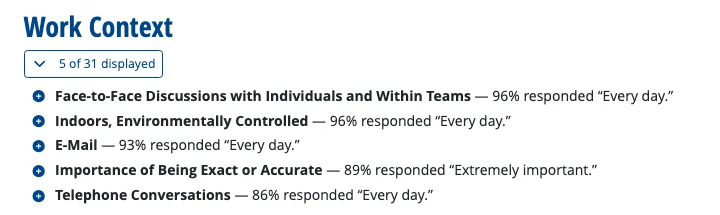
Pick one row as your target and rewrite your last three years of work in its language. Recruiters in drug safety and medical information screen for evidence of volume and accuracy, and you have both in quantities few other applicants can match, because every shift at a busy counter is a day of case review under time pressure. O*NET's work-context data for pharmacists records that 89% rate being exact or accurate as extremely important and 68% face time pressure every day, which is the profile a safety team hires for.
A pharmacist who says "reviewed an average of X prescriptions a shift for interactions" is describing a safety-surveillance job, and your own number is the proof.
One licensed pharmacist in sixteen already works outside pharmacy
If you do decide to leave, you will not be the first. The same workforce study counted what every licensed respondent was doing, including those no longer in practice.
| Answer | Share |
|---|---|
| Actively practising as a pharmacist | 73.5% |
| Working, but not as a pharmacist | 6.3% |
| Retired | 17.4% |
| Unemployed | 2.8% |
The same study records who stays and why they might not. Asked how much of their working time matched what they would like to be doing, 42.6% of practising pharmacists said only some of the time and another 5.4% said none of the time. Overall job satisfaction was reasonable, 69.1% somewhat or very satisfied, but dissatisfaction with chances of advancement ran highest in hospitals and health systems at 44.3%. Put together: many pharmacists like the profession well enough and dislike the shape of the job they hold in it.
Three questions that sort the shortlist
Write down the lowest salary you can take for two years before you start, because that single number rules rows of the table in or out faster than any preference. Then take the questions in order.
Question 1
Would an independent pharmacy, a hospital or an ambulatory clinic fix what wears you down?
Yes: Change setting first. The workload chart above is the argument: 91% of chain pharmacists rate their workload high against 55% in independents.
No: Go to the next question.
Question 2
Is your two-year floor close to your current pay?
Yes: Keep to the rows that can match it: pharmacy director and health system management, managed care and PBM, and senior industry roles after a fellowship or MSL years.
No: Go to the next question.
Question 3
Is your best hour the one where you catch an error nobody else saw?
Yes: Informatics, drug safety and medical information use that most.
No: If it is counselling, look at ambulatory care and patient programs. If it is arguing a drug's case with a specialist, look at MSL work.
Question 1 draws on the 2024 National Pharmacist Workforce Study (AACP) workload data; question 2 on the BLS table above. Each yes ends the path; each no moves you to the next question.
Your floor is also where most career changers are more flexible than their current pay suggests. In the Career Changer Index, three in five experienced quiz takers name a floor between 40k and 100k in their own currency.
| Answer | Share |
|---|---|
| Under 40k | 11.1% |
| 40k-60k | 19.8% |
| 60k-80k | 21.6% |
| 80k-100k | 19.2% |
| 100k-150k | 14.5% |
| 150k or more | 13.8% |

The career change quiz helps with the sort, resolving your answers to one of 20 archetypes with matched careers weighted by what you want next, and it handles the third question better than a checklist. One of its questions asks what you would do if money were settled, which is a hard question for anyone on a pharmacist's salary and a revealing one, because the answer tells you whether you want less volume or different work.
For the parallel exit from another licensed clinical profession, see career change from nursing.
Related guides: alternative careers for respiratory therapists.
Run your shortlist past the free quiz before you price a residency or a fellowship. It returns an archetype, a written reading and matched careers ranked by fit, and 12,200+ people have taken it. Check whether your answers point toward a new setting, industry or a field beyond pharmacy.
Frequently Asked Questions
Ready to find your passion career?
The free under-10-minute quiz maps your childhood patterns and flow triggers to one of 20 archetypes, then gives you matched careers and a 7-day first-step plan.
Take the Free Career QuizRelated Articles
Trusted by 12,200+ career-quiz takers across 165+ countries · Methods covered in